
How to Choose the Right Fabric and Colour for Your
Upholstered Bed
Buying a bed is one of those decisions that sounds straightforward until you actually
sit down and start making it. You pick your size, you figure out whether you want
storage, and then suddenly you are staring at a fabric selector with twelve different
options and no idea where to start. Plush velvet? Crushed velvet? Chenille? And
what colour works with the rest of your room without you getting bored of it in six
months?
This guide is here to walk you through all of it. Not in a vague, wishy-washy way, but
in a way that actually helps you land on a decision you will be happy with for years.
Most people treat fabric as an afterthought. They pick a bed frame they like, choose
a colour that roughly matches their bedroom, and call it done. But the fabric your bed
is upholstered in affects more than just how it looks. It affects how it feels when you
sit up in bed on a weekend morning, how it holds up over time, how easy it is to keep
clean, and how the entire room feels when you walk in.
An upholstered bed is usually the largest piece of soft furnishing in a bedroom. It
takes up more visual space than curtains, more than a rug, and often more than
every other piece of furniture combined. Getting the fabric right means your whole
room feels pulled together. Getting it wrong means it quietly bothers you every single
day.
So it is worth spending a bit of time on this.
Plush velvet is probably the most popular upholstery fabric for beds in the UK right
now, and for good reason. It has a soft, deep pile that catches light beautifully and
gives a bed an instantly luxurious feel, even at a mid-range price point.
The texture is consistent and smooth, which means it photographs well, wears
evenly, and tends to look expensive regardless of the colour you choose. It also
works across a wide range of interior styles. Whether your bedroom is leaning
minimalist, maximalist, Scandi, or somewhere in between, a plush velvet bed tends
to fit.
One thing to know about plush velvet is that it can show marks from sitting or leaning
on it. You will occasionally see impressions from hands or cushions. These brush out
easily, but if you are the type of person who will spend the next year annoyed by a
handprint on your headboard, it is worth keeping in mind.
Plush velvet is also warmer to the touch, which is a real plus in a UK bedroom during
winter.
Best for: Bedrooms that want a bit of drama and warmth. Works especially well in
deeper colours like navy, forest green, charcoal, and burgundy.
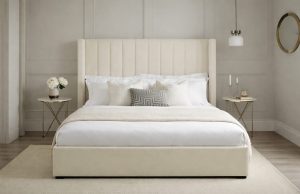
Crushed velvet has the same softness as plush velvet but with a distinctive shimmer.
The fibres are pressed in different directions during manufacturing, which creates
that slightly irregular, light-catching texture you will recognise immediately.
It is a bolder choice. Crushed velvet makes more of a statement and tends to work
best when you lean into it rather than try to tone it down. Paired with mirrored
furniture or metallic accents, it looks genuinely striking. Paired with very plain,
understated decor, it can feel a little out of place.
It is also slightly more practical than plush velvet in one specific way: the crushed
texture means marks and impressions are far less visible. The irregular pile
disguises pressure points naturally, so it is a good option if you have children or pets
who might be on the bed regularly.
Best for: Bedrooms with a glamorous or contemporary feel. Silver, champagne, and
jewel tones tend to look particularly good in crushed velvet.

Chenille is the fabric that often gets overlooked in favour of velvet, but it deserves
more credit than it gets. The word chenille comes from the French word for
caterpillar, which gives you a sense of the texture: soft, slightly fuzzy, and warm.
Unlike velvet, chenille has more visible texture and a slightly more casual, lived-in
feel. It is incredibly comfortable to touch, holds colour well, and tends to be one of
the more durable upholstery fabrics you can choose for a bed.
It also works in a wider range of bedroom styles than crushed velvet. Chenille can
feel cosy and traditional in a country-style bedroom, but it can also look clean and
contemporary depending on the colour and the frame design it is paired with.
If you want something that feels soft and welcoming without looking too formal or
glam, chenille is a strong choice.
Best for: Family homes, guest bedrooms, and anyone who wants warmth and texture
without the formality of velvet. Neutral tones and warm earthy shades tend to work
well in chenille.
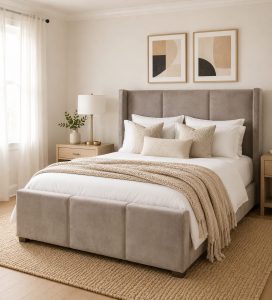
This is where most people get stuck, and it is understandable. Colour is personal,
trends change, and bedroom colour schemes are often a patchwork of things that
accumulated over time rather than a deliberate plan.
Here is a sensible way to think about it.
Look at your bedroom floor, your walls, and your existing furniture before you look at
a colour chart. The goal is not to match everything perfectly, because that tends to
look a bit flat and planned. The goal is to make sure nothing clashes and that the
colours complement each other.
If your bedroom is fairly neutral, which is most bedrooms in the UK, you have a lot of
freedom. A grey or beige room can take almost any colour of bed without it looking
out of place.
If your room already has a strong colour, say dark walls or patterned curtains, then a
more neutral bed tends to work better. Charcoal, slate grey, mink, and oatmeal are
all colours that sit quietly in a room and let other things do the talking.
Colours affect how a room feels. This is not interior design jargon, it is just true.
Darker colours, deep navy, forest green, midnight grey, and rich burgundy, make a
room feel more enveloping and intimate. If you want a bedroom that feels like a
proper retreat, a darker bed can anchor the space beautifully.
Lighter colours, soft grey, cream, blush, duck egg, and pale blue, keep the room
feeling open and airy. If your bedroom is on the smaller side or does not get a huge
amount of natural light, a lighter bed helps.
Jewel tones, teal, emerald, sapphire, sit somewhere in between. They add
personality and warmth without closing a room down the way very dark shades can.
One of the most common mistakes people make is assuming that choosing a neutral
colour for their bed means playing it safe in a bad way. In reality, a well-chosen
neutral, a proper warm grey, a soft taupe, a good mink, can be the most elegant
choice in the room.
The difference between a boring neutral and a sophisticated one is usually tone.
Warm neutrals with yellow or red undertones feel cosy. Cool neutrals with blue or
green undertones feel calm and modern. Pay attention to undertones rather than just
picking the lightest option on the chart
Trends in bedroom design change. A colour that feels fresh and current today might
feel dated in three years. This does not mean you should avoid anything fashionable,
but it is worth asking yourself whether you love a colour because it genuinely
appeals to you, or because you have seen it in a lot of mood boards lately.
Beds tend to stay in a room for a long time. A classic colour that you genuinely love
is almost always a better investment than a trendy colour that you kind of like.
If you are choosing a fabric bed, you will likely also have the option to choose a
button style on the headboard. This is a detail that makes a bigger difference than
you might expect.
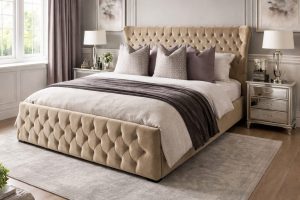
Deep buttoning creates a quilted, padded look with buttons set far into the fabric. It is
the most traditional and formal style, and it works beautifully in velvet. Deep buttoned
headboards have a classic, slightly grand quality that suits larger bedrooms and
more formal interiors.
Shallow or surface buttoning gives a cleaner, more contemporary look. The buttons
are present but the quilting is less dramatic. This style works across more interior
styles and tends to feel a bit more relaxed.
No buttons gives you a completely smooth, flat headboard. This is the most
minimalist option and works well in modern or Scandi-inspired bedrooms where you
want the fabric and colour to do the work without any additional visual detail.
None of these is objectively better than the others. It comes down to the look you are
going for and the style of the rest of your room.

A few practical notes on pulling the room together once you have chosen your bed.
Curtains and soft furnishings: You do not need to match your bed fabric to your
curtains, but they should share at least one element, either colour family, warmth of
tone, or texture type. A velvet bed with linen curtains can look brilliant because the
contrast in texture works. A velvet bed with very shiny, synthetic curtains in a
clashing colour is harder to pull off.
Flooring: Dark beds tend to need light floors to stop a room feeling heavy, and vice
versa. If you have dark wood floors or a very dark carpet, a lighter bed can open the
space up significantly.
Throw cushions and bed linen: These are the easiest things to change if you decide
you want to refresh the room. Choose your bed fabric as the anchor, then let your
linen and cushions respond to it rather than the other way around.

At Sleepworld Furniture, you can choose your headboard size as well as your fabric
and colour. This is worth paying attention to because headboard height has a real
effect on how the bed looks in the room.
A tall headboard makes a strong visual statement and works well in rooms with high
ceilings or as a deliberate focal point. A shorter headboard is more understated and
tends to suit lower-ceilinged rooms or more minimal interiors.
As a rough guide: if your ceiling is standard height and your bedroom is on the
smaller side, a medium headboard usually gives the best proportion. If you have a
generous room with high ceilings, a taller headboard can look genuinely stunning.
If you are choosing a bed with a storage base, you also have the option to add a
matching storage box. This is one of those additions that seems minor until you see
how much difference it makes to the overall look.
A matching storage box in the same fabric and colour as your bed makes the whole
piece feel more considered and intentional, rather than just a bed sitting on a
separate base. It also adds extra storage for things like spare linen, out-of-season
clothing, and anything else that tends to end up taking up wardrobe space.
If you are investing in an upholstered bed and care about how the room looks, the
matching storage box is usually worth adding.

All Sleepworld Furniture beds come with free UK delivery. If you want to take the
hassle out of assembly as well, there is an optional bed assembly service available
so everything is sorted from delivery to setup.
Choosing the right fabric and colour for your upholstered bed comes down to three
things: knowing your options, understanding your room, and being honest about
what you genuinely love rather than just what looks good on a screen.
Plush velvet for warmth and luxury. Crushed velvet for shimmer and personality.
Chenille for durability and a more relaxed texture. And within each of those, a colour
range wide enough to suit almost any bedroom in the country.
Take your time with it. This is not a decision you will be making again for a while.